
• Skip to primary navigation
  • Skip to main content

Erdle Consulting Group

Moving your organization FORWARD

ELEVATING

Your Philanthropic Practice

  • Home
  • About
    • About Us
    • Why Hire Us
    • Our Experts
  • Clients
  • Services
  • Blog
  • Contact

systems change

Boy wearing gloves welding a metal spatula

From Moment to Meaning: The Power of the Big Picture

read more

It may come as no surprise that, right now, as I shepherd a college senior through the final stretch of the college process (yes, it is May 6 of his senior year), we are spending a lot of time talking about the “big picture,” the “end game,” and even “vision.”

As we held onto spots on two waitlists, other ideas surfaced in our conversations: being comfortable with the uncomfortable, and the story of Jesus in the wilderness—a story, and a symbol, of waiting, patience, planning, and thinking intentionally about where you ultimately want to end up, who you want to be, the sum of all of your resources, your efforts, your choices.

In my role as an advisor to individuals and foundations making significant decisions about their hard-earned and carefully invested money—what I call philanthropic capital—I am continually struck by how often the big picture disappears in the moment of the transaction.

Giving becomes compressed into deadlines and logistics: before June 30 or December 31, during a day of giving, in response to a request from a colleague or friend, or within a quarterly meeting where a list is handed off to a banker, assistant, or foundation staff member. The act is completed, but the intention behind it is often left underexamined.

Where did the notion come from that this money is somehow less purposeful, less worthy of our time, less precious, or less economically important than any other capital we manage?

And from a more human perspective: does the good we feel when we make a donation exist only in that brief moment? Or could we change how we give so that the relationship, the interaction, and the impact endure far beyond the transaction itself?

Lessons from Intentional Choices

Right now, I am talking about the big picture of philanthropy, but the conversation could easily be about education, our marriages, our families, our work.

Each of us directs certain resources to efforts and outcomes in our lives, and then, more often than not, we step aside and move on. If we take the college process, for example, or let’s say the fundraising process between donors and nonprofits, are they that dissimilar?

The end game is succesful acceptance to your college of choice. Years of academic work, review of what your goals are, what your field of study is, what you can afford, what activities you will take on, and planning for that investment involve students, parents, schools, teachers, coaches, and advisors. What about the fundraising process? Are we clear what we want our “investment” to achieve? How do we want to change the world and what outcome are we seeking in partnership with nonprofits and communities? 

To be clear, I am not advocating for donor micromanagement. That would be not only counterproductive, but unethical; nonprofits should—and must—retain control over how funds are used once a gift is made.

But what if we approached giving differently? What if each of us—regardless of whether we give a little or a lot—considered the broader vision and long-term impact of our philanthropy?

The Accountability Factor: Seeking Vision and Impact

Nonprofits and communities are navigating increasingly complex challenges across housing, mental health, education, and more. These organizations are the experts in their fields. Yet many spend close to 40% of their time and resources managing donor expectations, fundraising repeatedly, reshaping budgets to meet artificial overhead constraints, and producing reports and messaging designed to reassure donors that their money is being used “correctly.”

We hold nonprofits to extraordinarily high standards. But do we hold ourselves, as donors, to any standard at all?

Historically, the answer is no. While some donor networks and philanthropic institutions have developed principles, guidelines, and even urgent calls to action around donor behavior, these efforts are difficult to enforce. Often, they are constrained by the very audiences they seek to influence or are perceived as too prescriptive for donors to fully embrace.

Real change in donor behavior requires stepping back and resurfacing the big picture. What do we want the philanthropic ecosystem to look like? Why does that matter? And what must change—in our behaviors, our expectations, and our decisions—to make that vision possible?

The past several years in America have been challenging, eye-opening, and, at times, deeply divisive. Regardless of perspective, there is broad agreement on that reality. What is often missing is a sustained focus on the big picture—on how individual actions, small shifts in behavior, and deeper engagement with our communities can collectively shape a different future.

America, and our individual lives, are long games. Democracy, capitalism, and the pursuit of opportunity depend on sustained participation and shared responsibility. While government at all levels plays a critical role, the private sector—and individuals within it—has always been a powerful force in shaping the country’s trajectory.

Recommitting to Shared Vision, Outcomes and Impact

And sometimes, the clearest reminder of the power of the long game and the big picture shows up close to home.

Our son applied to eight universities and was accepted to seven. His first choice, the University of Virginia Engineering School, did not come easily—he was waitlisted. What followed was not a single defining moment, but a series of intentional ones: writing letters, improving his grades, continuing to show up, and, just last Friday, sending a video of himself welding a spatula (notice I did not say wielding, he was actually using tools to make a metal spatula– engineering school remember?) On Tuesday, May 5, he was one of 260 students admitted from the waitlist.

That outcome was not the result of one application or one decision. It was the culmination of years of academic effort, character development, curiosity, and engagement with the world around him. He saw what he wanted, stayed with it, and achieved it. I am extremely proud.

It is a reminder that the most meaningful outcomes in life are rarely transactional. They are built over time—with vision, persistence, and a willingness to stay engaged even when the path is uncertain.

Philanthropy should be no different.

Like any meaningful decision, the power lies with the individual. Vision matters. Understanding the end game matters. The big picture is where lasting impact—and our most meaningful contributions—take shape.

So the question becomes: what kind of world do we want to help build? How intentional are we willing to be? And who do we choose to stand alongside in that effort?

Philanthropy cannot be reduced to one-off transactions or check-the-box moments. We are part of a broader community, and we are all invested in what comes next.

How will you engage with the big picture? And what will your contribution be?
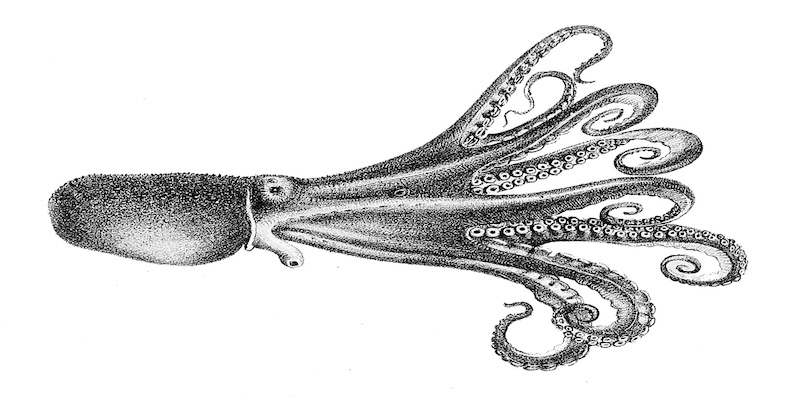
Vintage black and white sketch of an octopus

Comfort or Courage? Remaking the Complex World of Philanthropy

read more

The first thing that caught my eye in my latest Harvard Business Review magazine were the beautiful plate drawings of octopi. Surprising, right? What could possibly be the connection between an octopus and business—and for me, between an octopus and philanthropy?​

I haven’t read Remarkably Bright Creatures yet, but when my kids were little, we loved the cartoon Oswald—an adventurous octopus who encouraged curiosity. I’ve been fascinated by this adaptable, intelligent creature for years.

Vintage black and white sketch of an octopus

“Become an Octopus Organization: How Your Company Can Adapt to a Complex World,” uses the octopus as a metaphor for organizations that thrive in complex environments –constantly sensing change and adjusting in real time. That idea of awareness—of ourselves and the impact of our actions—landed with me in a very personal way.​

While the pictures drew me in, the content made me pause and reflect on my leadership as an entrepreneur, disruptor, fundraiser, grantmaker, and board member. This led me to thinking about the roles I play at every intersection of my life. Reading this on a snowy MLK weekend made me ask: How do I show up with my kids? With my friends and colleagues? With extended family? With grantees and community partners?​

Am I an “Octopus” or a “Tin Man?”

The authors describe Tin Man organizations as “rigid, optimized for mass production, adherence to process, and top‑down planning.”  That model worked in a simpler world but fails to fit today’s complex, interconnected nonprofit landscape. A Tin Man, like the character, struggles in complex environments, has trouble adapting, and avoids risks by limiting exposure and holding onto tight boundaries. As a leader and consultant,  I often relied on strict processes and solo decision making to get my work done—but I now see how easily that approach slips into “Tin Man” mode.​

My “customers”—the nonprofit and community partners I have supported through grantmaking and board leadership—depended on my curiosity, relationships, and openness to learning.

Avoiding risk often meant avoiding the very issues communities were facing. It was actually less risky to engage, support, and participate, because that allowed me to see the real impact of our funding.​

Looking Back

Looking back, I see my “Tin Man” habits stemmed partly from the family foundation’s antiquated governance structure. At the beginning of my tenure, that was the guide that defined my success.

That structure suited a more top-down era focused on control and predictability, not today’s complex world where small actions and changes ripple unpredictably through communities. Even as I adapted the model, there were boundaries it was unacceptable to push.​ 

I am not alone in this; many new family foundation executive directors struggle to move beyond outdated models and adapt.​

Looking Ahead: Innovation, Adaptability, and Curiosity

In philanthropy, having the ability – and permission – to ask bold questions, innovate, and redefine risk is essential for genuine progress. The authors describe such habits as “antipatterns”—routines that hinder ownership, blur clarity, and stifle curiosity. I didn’t have that language at the time, but I certainly felt the effects.​

Eventually, I realized that the processes built decades ago no longer serve the complex world in which we live. This is where the amazing octopus enters.

“Octopus Organizations”, as the article describes, tap the intelligence of the world around them, distribute decision-making, and learn and shift course at speed to navigate uncertainty. As a grantmaker, that translates directly into how we listen to communities, share power, and let the people closest to the work own the solutions.​

Who are philanthropy’s customers?

This raises a vital question in family philanthropy: are our true customers our fellow family members–or the communities and nonprofits we serve? The article challenges leaders to obsess over whether their choices create more value for their “customers,” and, in philanthropy, that lens would push us outside of the boardroom and into the community.​

Family involvement in foundations is important but ignoring better ways to serve communities means choosing Tin Man comfort over Octopus courage. The article urges organizations to “rewrite their DNA”—changing not only processes but the underlying rules and mental models, shifting from command-and-control to agency and trust.

We can keep focusing inward and granting transactionally, or choose to tackle root causes and system inequities for deeper impact. Foundations – and even individual funders- can absolutely do this work, but only if we are willing to look beyond our own reflection.​

Remaking the Mindset: Evolving, Progressing and Learning because the System Needs Us

As an entrepreneur and a leader I choose to keep evolving and learning, until homelessness, poverty, illiteracy, youth mental health….etc. are truly addressed. And I hope to inspire other funders to do the same. As octopus leaders we can be “system architects” whose primary job is to work on the system, not in it, removing friction, clarifying purpose, and creating conditions where others can excel.  

That vision defines my role in philanthropy designing adaptable blueprints that funders can use to guide their questions, funding decisions and, importantly, impact while evolving with community wisdom.

Holding Ourselves Accountable

Funders rarely have pressure to change, and in a complex world we seek is difficult to measure or see clearly. Years of nonprofit fundraising and grantmaking work have taught me this: flexible and consistent funding and advocacy create real impact. Once you see that impact, there’s no return to the alternative.

Like an octopus sensing its surroundings, the answers to the complex challenges in our communities are in reach should we choose to ask different questions, step out with courage, and do our part to act and problem solve differently. In short, take ownership of the impact of our philanthropy and consider our place within its community architecture.​

Ultimately, we each must choose which direction we head, but I cannot promise that inaction, avoidance, or risk aversion to the problems will be solved that way.  The more we can sense, and stretch like an octopus into the communities we claim to serve, the more likely we will change many of the paradigms that hold our communities back, ourselves included. I’ll hang with the octopus any day.

Allison Erdle is a Philanthropy Consultant and former Executive Director at a family foundation. She partners with foundations, individuals, and their advisors who want to be more intentional, strategic, and informed about the impact of their philanthropy, helping them rethink how their funding supports nonprofits and strengthens communities.

GET UPDATES IN YOUR INBOX

  • About Us
  • Clients
  • Services
  • Blog
  • Contact
Linked In
Erdle Logo

ERDLE CONSULTING GROUP, LLC

24 W. Cedar Street
Alexandria VA 22301
703-554-4675

©  2026 Erdle Consulting Group. All Rights Reserved.